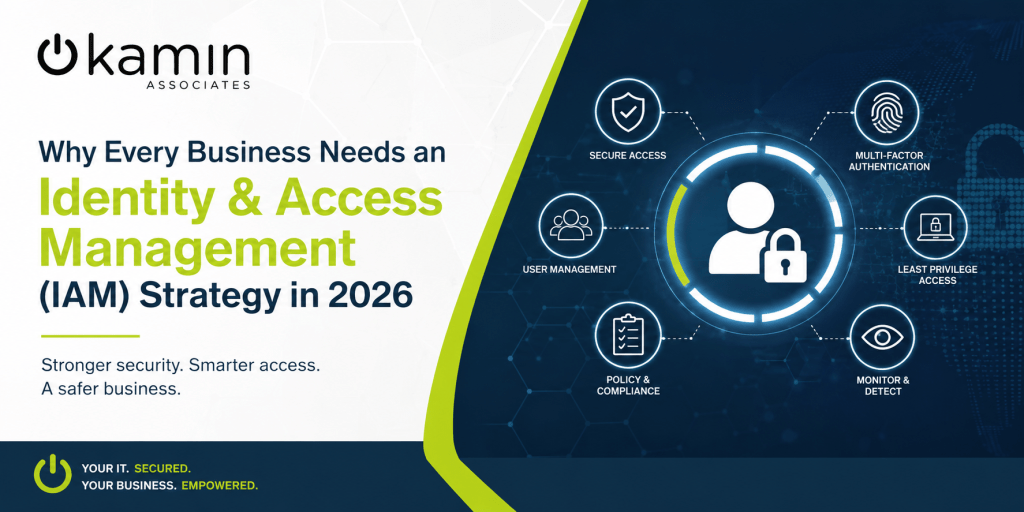
As businesses continue adopting cloud applications, remote work, and mobile devices, cybersecurity has become more than protecting networks and computers. Today, user identities have become one of the most valuable targets for cybercriminals. A stolen username and password can provide attackers with direct access to sensitive business systems without ever needing to exploit a technical vulnerability.
This shift has made Identity and Access Management (IAM) one of the most important components of modern cybersecurity. An effective IAM strategy helps businesses control who has access to company resources, reduce security risks, and simplify user management as organizations grow.
What Is Identity and Access Management?
Identity and Access Management (IAM) is a framework of policies, technologies, and processes that ensures the right people have access to the right systems at the right time.
Rather than simply creating usernames and passwords, IAM manages the entire lifecycle of a user’s access, including:
- User account creation
- Authentication methods
- Permission management
- Role-based access
- Multi-factor authentication (MFA)
- Password policies
- Account deactivation when employees leave
A well-designed IAM strategy helps organizations maintain security while allowing employees to work efficiently across cloud services, business applications, and corporate networks.
Why Identity Has Become the New Security Perimeter
Years ago, businesses primarily focused on protecting their office network with firewalls and antivirus software. While those tools remain important, today’s workforce accesses company resources from home offices, mobile devices, cloud applications, and third-party platforms.
Cybercriminals recognize this shift. Instead of attacking networks directly, they increasingly target employee credentials through phishing emails, password theft, social engineering, and credential-stuffing attacks.
Once an attacker successfully logs in using legitimate credentials, traditional security tools may struggle to distinguish them from an authorized user.
This makes identity security one of the first lines of defense against modern cyber threats.
Common IAM Mistakes Businesses Make
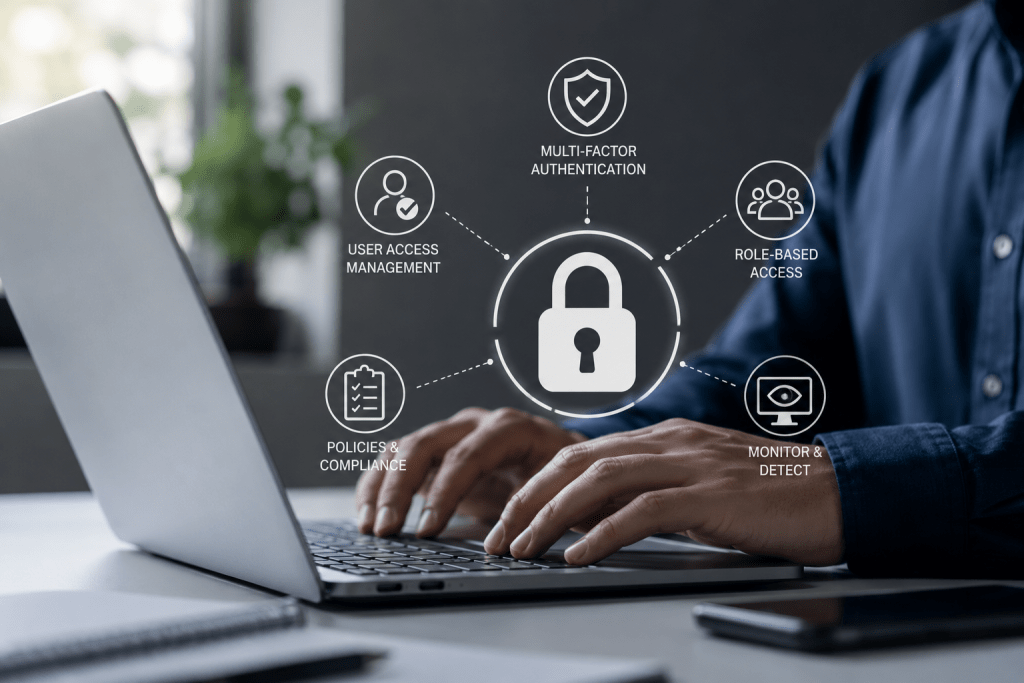
Many organizations unintentionally create security risks through poor identity management practices. Some of the most common include:
Excessive User Permissions
Employees often accumulate access to systems they no longer need as their responsibilities change. Over time, these unnecessary permissions create opportunities for attackers to move throughout the network if an account becomes compromised.
Following the principle of least privilege ensures users only have access to the information and systems required to perform their jobs.
Shared User Accounts
Some businesses still use shared administrator accounts or generic logins for convenience. Unfortunately, shared accounts eliminate accountability and make it difficult to determine who performed specific actions within the network.
Every employee should have their own unique credentials.
Weak Authentication
Passwords alone are no longer enough to protect business systems. Weak passwords, password reuse, and stolen credentials remain among the leading causes of data breaches.
Implementing multi-factor authentication adds an additional layer of security that significantly reduces the likelihood of unauthorized access.
Forgotten Accounts
Former employees, contractors, and temporary workers sometimes retain active accounts long after leaving the organization. These forgotten accounts create unnecessary security risks because they often go unnoticed during routine monitoring.
Regular account reviews help identify and remove unused identities before they become a problem.
How IAM Supports Business Growth
Identity and Access Management isn’t only about improving cybersecurity. It also helps businesses operate more efficiently.
As organizations grow, adding new employees, departments, vendors, and remote workers becomes increasingly complex. Without centralized identity management, IT teams spend unnecessary time manually creating accounts, assigning permissions, and troubleshooting access issues.
A structured IAM strategy simplifies these processes by standardizing user provisioning and access management.
New employees receive appropriate access quickly, role changes happen consistently, and departing employees can be removed from all business systems immediately.
This reduces administrative workload while improving both productivity and security.
The Role of IAM in Compliance
Many industries require organizations to demonstrate that sensitive information is protected through appropriate access controls.
Whether your business must comply with HIPAA, PCI DSS, CMMC, or other regulatory requirements, identity management often plays a central role in meeting security standards.
An effective IAM program helps organizations:
- Control access to sensitive data
- Maintain audit trails
- Enforce password policies
- Implement multi-factor authentication
- Review user permissions regularly
- Remove inactive accounts promptly
Strong identity controls also support cyber insurance requirements, as many insurers now expect organizations to demonstrate secure access management before providing coverage.
Best Practices for Building an IAM Strategy
Every business has different technology requirements, but several best practices apply across nearly every organization.
Implement Multi-Factor Authentication Everywhere
Enable MFA for email, Microsoft 365, VPNs, remote desktop access, financial systems, and any cloud applications that support it.
Even if passwords become compromised, MFA can prevent many unauthorized login attempts.
Apply Role-Based Access Control
Rather than assigning permissions individually, create standardized access levels based on employee roles.
This simplifies user management while ensuring employees receive consistent access appropriate for their responsibilities.
Review Permissions Regularly
Access needs change over time. Conduct periodic reviews to verify that employees still require the permissions they currently have.
Removing unnecessary access reduces risk without impacting productivity.
Monitor Login Activity
Unexpected login locations, unusual access times, or repeated authentication failures may indicate compromised credentials.
Continuous monitoring allows businesses to detect suspicious behavior before attackers cause significant damage.
Remove Accounts Immediately
When employees leave the company, disable all accounts as part of the offboarding process.
Prompt account removal prevents former credentials from becoming future attack vectors.
How Managed IT Services Help Strengthen Identity Security
Building and maintaining an effective IAM strategy requires ongoing attention. As technology environments become more complex, many businesses rely on managed IT providers to help oversee identity security.
A managed IT partner can assist with:
- Identity security assessments
- Microsoft 365 identity management
- Multi-factor authentication deployment
- User provisioning and offboarding
- Permission audits
- Security monitoring
- Policy development
- Ongoing compliance support
By combining technology with proactive oversight, businesses gain stronger protection without placing additional demands on internal staff.
Final Thoughts
Cybersecurity no longer begins at the network perimeter. It begins with identity. Every employee account represents both an opportunity for productivity and a potential point of entry for attackers.
An effective Identity and Access Management strategy helps businesses reduce cyber risk, improve operational efficiency, support compliance requirements, and better protect sensitive information. As cyber threats continue evolving in 2026, investing in strong identity security is no longer optional. It is a critical part of building a resilient and secure business.
If you’re unsure whether your current identity management practices are protecting your business, the team at Kamin Associates can assess your environment, identify security gaps, and help implement an IAM strategy that supports your organization’s long-term security and growth.