Cybersecurity conversations often focus on firewalls, endpoint protection, multi-factor authentication, and employee training. While all of these measures are important, they depend on one critical foundation that many organizations overlook: knowing exactly what technology exists within the business.
If you don’t know every laptop, server, mobile device, cloud application, network switch, or user account connected to your environment, you can’t effectively secure it. Unfortunately, many businesses discover forgotten devices or outdated software only after a vulnerability is exploited or an audit reveals significant gaps.
An accurate IT asset inventory provides the visibility needed to protect your organization, improve operational efficiency, and make smarter technology decisions. It serves as the foundation for nearly every cybersecurity and IT management strategy.
What Is an IT Asset Inventory?
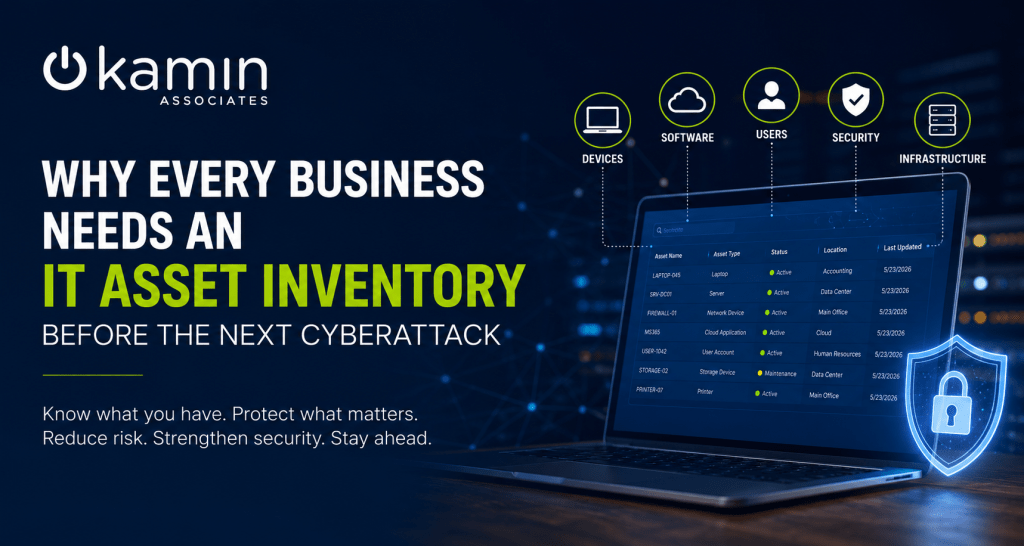
An IT asset inventory is a centralized record of every technology asset your organization owns, manages, or uses. While many businesses think only of computers and servers, a complete inventory includes much more than hardware.
Your inventory should document:
- Desktop computers and laptops
- Servers and virtual machines
- Mobile devices
- Network equipment such as firewalls, switches, and wireless access points
- Printers and other connected devices
- Cloud platforms and SaaS applications
- Licensed software
- User accounts and permissions
- Operating systems and firmware versions
Each asset should include important details such as its location, owner, warranty status, operating system, software versions, lifecycle stage, and maintenance history.
Maintaining this information allows IT teams to understand their environment, identify potential risks, and plan for future upgrades instead of reacting to unexpected problems.
You Can’t Protect What You Can’t See
Every device connected to your network represents a potential entry point for attackers. If even one system is forgotten or unmanaged, it can become an easy target.
Many businesses unintentionally accumulate technology over the years. Employees receive replacement laptops, departments purchase software independently, temporary equipment is installed for projects, and cloud services are adopted without centralized oversight.
Over time, organizations often lose track of:
- Retired computers that were never securely removed
- Test servers left running after projects end
- Old employee accounts that remain active
- Software subscriptions no one remembers purchasing
- Remote devices that rarely connect to the corporate network
- Internet-connected devices with outdated firmware
Cybercriminals actively search for these overlooked assets because they often lack current security updates and monitoring.
The fewer unknown devices your organization has, the smaller your attack surface becomes.
An Accurate Inventory Strengthens Every Security Initiative
An IT asset inventory isn’t valuable simply because it creates a list of equipment. Its real value comes from improving every aspect of your cybersecurity program.
Faster Vulnerability Management
Security teams cannot patch systems they don’t know exist.
When a critical software vulnerability is announced, organizations with accurate inventories can quickly identify affected devices, prioritize updates, and reduce exposure before attackers have an opportunity to exploit the issue.
Better Patch Management
Operating systems, applications, firmware, and security tools all require regular updates.
Without visibility into every device, some systems inevitably miss critical patches. Those unpatched assets often become the weakest link in an otherwise secure environment.
More Effective Incident Response
If suspicious activity occurs, responders need immediate answers.
Questions such as:
- Which device is affected?
- Who uses it?
- What software is installed?
- What systems can it access?
are much easier to answer when asset information is already documented.
Faster answers lead to faster containment and reduced business disruption.
Improved Compliance
Many industries require organizations to maintain documented technology inventories as part of regulatory or cybersecurity frameworks.
Whether preparing for an insurance review, security assessment, or compliance audit, having a current inventory demonstrates that your organization understands and actively manages its IT environment.
Smarter Technology Planning
Asset inventories also support budgeting and long-term planning.
Instead of waiting for hardware failures, businesses can identify aging equipment, schedule replacements strategically, and avoid unexpected capital expenses.
Common Signs Your Inventory Needs Attention
Many organizations assume they have an asset inventory because someone maintains a spreadsheet.
Unfortunately, static spreadsheets become outdated almost immediately.
If any of these situations sound familiar, your inventory may no longer be reliable:
- Multiple departments maintain separate equipment lists.
- No one knows exactly how many devices are on the network.
- Software licenses are difficult to track.
- Former employee accounts remain active longer than expected.
- IT staff spend significant time locating device information.
- Surprise devices appear during security scans.
- Technology audits become lengthy manual projects.
These issues often develop gradually, making them easy to overlook until they create operational or security problems.
Shadow IT Creates Hidden Risk
One of today’s fastest-growing challenges is shadow IT.
Shadow IT refers to hardware, software, or cloud services that employees adopt without formal approval or oversight from IT.
An employee might:
- Sign up for a cloud storage platform.
- Purchase project management software.
- Install unauthorized browser extensions.
- Connect personal devices to the company network.
While these decisions are usually made with good intentions, they create blind spots.
Without centralized visibility, IT cannot ensure these tools meet security standards, receive updates, or properly protect sensitive business information.
A comprehensive asset inventory helps identify unauthorized technology so organizations can either secure it appropriately or replace it with approved solutions.
Why Manual Tracking Is No Longer Enough
Modern business environments change constantly.
Employees work remotely.
Devices move between offices.
Cloud applications are added every month.
Virtual machines are created and removed on demand.
Trying to manage this environment manually becomes increasingly difficult.
Automated discovery and monitoring tools continuously identify devices, software, and network changes, providing a far more accurate picture than spreadsheets ever could.
These tools also alert IT teams when new devices appear, unauthorized software is installed, or assets fall out of compliance.
Automation keeps inventories current while reducing administrative work.
How Managed IT Providers Help Maintain Visibility
Creating an inventory is only the first step. Keeping it accurate requires ongoing management.
A managed IT provider can help businesses maintain continuous visibility by:
- Automatically discovering new devices
- Tracking hardware and software lifecycles
- Monitoring operating system and firmware versions
- Identifying unsupported or aging equipment
- Maintaining documentation for audits and compliance
- Supporting strategic technology planning and budgeting
- Detecting unauthorized devices and applications
Rather than performing one-time inventories every few years, businesses benefit from continuous oversight that evolves as their technology environment changes.
This proactive approach not only improves cybersecurity but also reduces downtime, simplifies maintenance, and helps organizations make informed technology investments.
Visibility Is the First Layer of Cybersecurity
Cybersecurity is most effective when built on a strong foundation. Before organizations can defend systems, monitor activity, patch vulnerabilities, or respond to incidents, they must first understand what they are protecting.
An accurate IT asset inventory provides that foundation.
It improves security, strengthens compliance efforts, supports smarter budgeting, and helps eliminate the unknown devices and applications that attackers often exploit.
At Kamin, we help businesses gain complete visibility into their IT environments through proactive monitoring, infrastructure management, vulnerability assessments, and ongoing managed IT services. By maintaining an accurate understanding of your technology assets, you can reduce risk, improve operational efficiency, and build a stronger cybersecurity posture that supports your business as it grows.
If you’re unsure whether your current asset inventory is complete or up to date, now is the perfect time to evaluate it. Knowing what you have today could make all the difference when responding to tomorrow’s cybersecurity challenges.