Growth is the goal of nearly every business. Whether that means hiring new employees, expanding into new markets, opening additional locations, or adopting new technology, growth creates opportunities for increased revenue and long-term success. However, growth also introduces new cybersecurity risks that many organizations fail to anticipate.
As businesses expand, their technology environments become more complex. More users, devices, applications, vendors, and data create additional opportunities for cybercriminals to exploit vulnerabilities. Without a clear understanding of these risks, organizations may unknowingly expose themselves to costly security incidents, compliance violations, and operational disruptions.
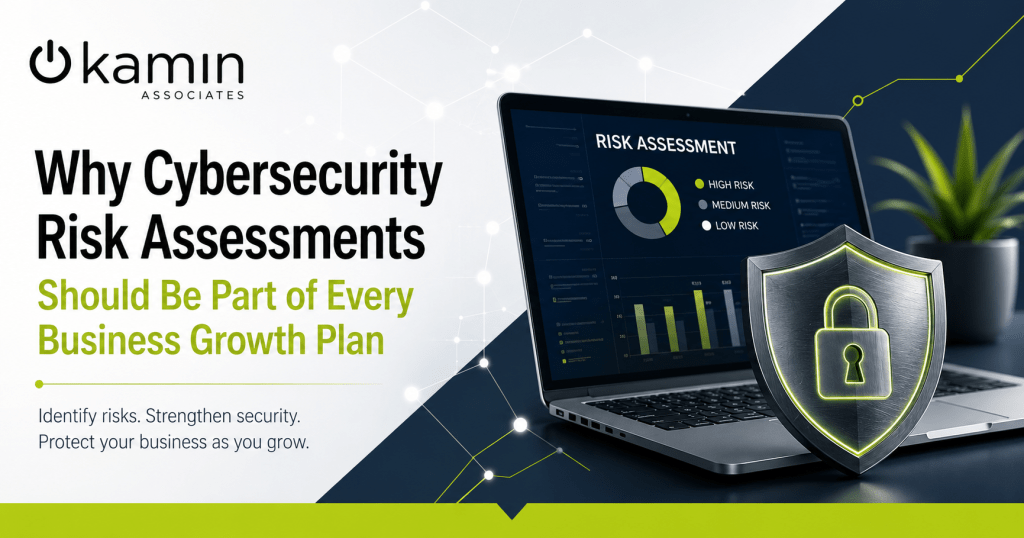
This is why cybersecurity risk assessments should be a fundamental part of every business growth plan. Rather than waiting for a security incident to reveal weaknesses, risk assessments help organizations identify vulnerabilities proactively and develop strategies to address them before they become serious problems.
What Is a Cybersecurity Risk Assessment?
A cybersecurity risk assessment is a structured evaluation of an organization’s technology environment, security controls, policies, and potential threats. The purpose is to identify vulnerabilities, determine the likelihood and impact of various risks, and prioritize actions that strengthen security.
A comprehensive assessment typically examines:
- Networks and infrastructure
- Servers and endpoints
- User access controls
- Cloud applications and services
- Security policies and procedures
- Backup and disaster recovery capabilities
- Vendor and third-party risks
- Compliance requirements
The outcome is a clearer understanding of where security gaps exist and which improvements should be prioritized based on business impact.
Why Business Growth Increases Cybersecurity Risk
Many business leaders focus on the operational and financial challenges associated with growth but overlook the cybersecurity implications.
As organizations grow, they often:
- Add new employees who require system access
- Implement new software platforms
- Increase remote or hybrid work arrangements
- Expand cloud environments
- Store larger amounts of sensitive data
- Work with more third-party vendors and partners
Each of these changes expands the organization’s attack surface.
For example, adding employees means creating additional user accounts that must be properly secured. Introducing new software can create integration vulnerabilities. Expanding remote access capabilities may expose systems to unauthorized access if security controls are not properly configured.
Without regular assessments, these risks can accumulate unnoticed until a cyberattack or security incident occurs.
The Cost of Unidentified Cyber Risks
Many organizations assume they are secure because they have antivirus software, firewalls, and basic cybersecurity tools in place. While these technologies are important, they do not eliminate all risk.
Cybercriminals continually evolve their tactics, targeting misconfigurations, weak passwords, outdated software, and human error. Even a small security gap can provide an entry point for attackers.
The consequences of an undetected vulnerability can be significant:
Financial Losses
Cyber incidents can result in direct financial costs related to ransomware payments, forensic investigations, legal expenses, regulatory fines, and system recovery efforts.
Operational Disruption
A successful attack can bring business operations to a standstill. Employees may lose access to critical systems, customers may experience service interruptions, and productivity can decline dramatically.
Reputational Damage
Customers and business partners expect organizations to protect sensitive information. A security breach can damage trust and potentially impact future business opportunities.
Compliance Issues
Many industries are subject to regulatory requirements governing data protection and cybersecurity practices. Failure to meet these requirements can lead to audits, penalties, and legal complications.
Cybersecurity risk assessments help organizations identify and address vulnerabilities before they create these costly outcomes.
Risk Assessments Support Smarter Technology Decisions
Business growth often requires technology investments. Organizations may adopt cloud platforms, implement collaboration tools, upgrade infrastructure, or expand network capabilities.
Without understanding existing security risks, businesses may make technology decisions that unintentionally introduce new vulnerabilities.
A cybersecurity risk assessment provides valuable insight that helps leaders make informed decisions about:
- Technology upgrades
- Security investments
- Cloud migrations
- Vendor selection
- Infrastructure expansion
- Remote work strategies
Rather than reacting to security problems after implementation, businesses can incorporate security considerations into planning from the beginning.
This proactive approach often reduces long-term costs while improving overall resilience.
Compliance Requirements Continue to Evolve
Many organizations are facing increasing pressure to meet cybersecurity and data protection requirements. Depending on the industry, businesses may need to comply with regulations, customer security standards, cyber insurance requirements, or contractual obligations.
Risk assessments help organizations evaluate their current security posture against these expectations and identify areas that require improvement.
Even companies that are not subject to formal regulations benefit from adopting cybersecurity best practices. Many customers now expect vendors and business partners to demonstrate strong security controls before entering into contracts or sharing sensitive information.
A documented cybersecurity risk assessment can provide evidence that an organization is taking reasonable steps to manage and reduce risk.
What Happens During a Cybersecurity Risk Assessment?
While every assessment is different, most follow a structured process designed to evaluate both technical and operational risks.
The process often includes:
Asset Identification
Understanding what systems, applications, devices, and data need protection.
Vulnerability Evaluation
Reviewing systems for weaknesses such as outdated software, configuration issues, and security gaps.
Threat Analysis
Identifying potential threats that could impact the organization, including cybercriminals, insider threats, ransomware, and phishing attacks.
Risk Prioritization
Determining which vulnerabilities pose the greatest business risk and should be addressed first.
Recommendations and Roadmap Development
Providing actionable recommendations that help improve security while aligning with business objectives and budgets.
The result is not simply a list of problems. It is a practical roadmap for strengthening security over time.
Risk Assessments Create a Foundation for Long-Term Growth
Cybersecurity should not be viewed as a barrier to growth. Instead, it should be seen as an enabler of sustainable business success.
Organizations that understand their risks are better positioned to:
- Scale operations confidently
- Adopt new technologies securely
- Support remote and hybrid workforces
- Meet compliance requirements
- Protect customer data
- Reduce the likelihood of costly incidents
As businesses grow, the potential impact of a security breach grows as well. The systems, data, and processes that support success become increasingly valuable targets for attackers.
A cybersecurity risk assessment provides the visibility needed to manage these risks proactively rather than reactively.
Partner with Kamin Associates to Strengthen Your Security Strategy
Business growth and cybersecurity should go hand in hand. Waiting until after a security incident occurs is often far more costly than identifying risks before they can be exploited.
Kamin Associates helps organizations evaluate their security posture, uncover vulnerabilities, and develop practical strategies to reduce risk. Through comprehensive assessments, vulnerability scanning, and cybersecurity consulting, we help businesses build stronger security foundations that support long-term growth.
If you’re planning for growth, now is the time to understand the risks that could stand in the way. Contact Kamin Associates today to learn how a cybersecurity risk assessment can help protect your business and prepare you for the future.