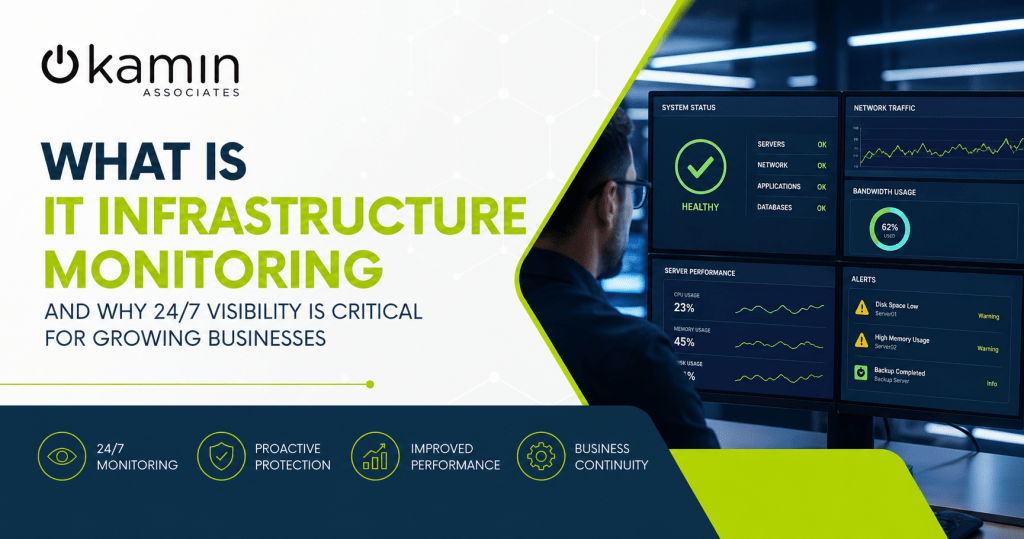
As businesses become increasingly dependent on technology, the health of their IT infrastructure directly impacts productivity, security, and profitability. Servers, networks, workstations, cloud services, and internet connections all need to work together seamlessly to support daily operations. Unfortunately, many organizations don’t realize there’s a problem until employees can’t access critical applications or customers begin noticing service disruptions.
That’s where IT infrastructure monitoring comes in.
Rather than waiting for systems to fail, infrastructure monitoring continuously watches the health and performance of your technology environment, allowing IT professionals to detect issues early and often resolve them before they affect your business. For growing companies, this proactive approach can significantly reduce downtime, improve cybersecurity, and provide greater confidence that critical systems are always performing as expected.
What Is IT Infrastructure Monitoring?
IT infrastructure monitoring is the ongoing process of observing and analyzing the performance, health, and availability of the technology that keeps your business running.
This includes monitoring components such as:
- Physical and virtual servers
- Network switches and routers
- Firewalls
- Wireless networks
- Workstations and laptops
- Cloud infrastructure
- Storage devices
- Internet connectivity
- Critical business applications
Monitoring platforms continuously collect performance data and generate alerts when something falls outside normal operating conditions. This allows IT teams to investigate and address problems before they become major outages.
Instead of reacting to failures after they occur, businesses gain the ability to identify trends, anticipate problems, and maintain a more stable IT environment.
Why Reactive IT Support Isn’t Enough
Many businesses still operate with a reactive mindset. If an employee can’t log in, a server crashes, or the internet goes down, they call IT for help.
While reactive support solves immediate problems, it often means the damage has already been done.
A single unexpected outage can lead to:
- Lost employee productivity
- Interrupted customer service
- Missed sales opportunities
- Delayed projects
- Emergency repair costs
- Damage to your company’s reputation
Infrastructure monitoring shifts IT from reacting to preventing. Rather than waiting for users to report problems, monitoring tools notify technicians as soon as unusual activity is detected.
In many cases, issues can be resolved before employees even realize there was a problem.
What Does 24/7 Monitoring Actually Watch?
Modern monitoring platforms provide visibility into hundreds of performance indicators across your IT environment.
Some of the most important include:
Server Health
Servers are often the backbone of business operations. Monitoring checks CPU usage, memory consumption, disk capacity, hardware health, and system availability to identify performance issues before they cause downtime.
Network Performance
Slow networks can impact every employee. Monitoring tools track bandwidth utilization, latency, packet loss, and network device performance to ensure data flows efficiently throughout the organization.
Storage Capacity
Running out of storage space can quickly bring business operations to a halt. Monitoring systems alert IT teams when storage utilization reaches predefined thresholds, allowing additional capacity to be added before it becomes an emergency.
Internet Connectivity
Reliable internet access is essential for cloud applications, communication, and customer interactions. Monitoring helps identify outages, unstable connections, and service degradation that could affect business operations.
Security Events
Many monitoring platforms also integrate with cybersecurity tools to identify unusual login activity, failed authentication attempts, unauthorized configuration changes, and suspicious network traffic.
This additional visibility allows potential security incidents to be investigated much faster.
The Business Benefits of Continuous Infrastructure Monitoring
Infrastructure monitoring isn’t simply an IT tool. It delivers measurable business value across the organization.
Minimize Downtime
The sooner an issue is detected, the sooner it can be resolved.
Early alerts allow technicians to fix many problems before they interrupt employees or customers, reducing costly downtime and improving business continuity.
Improve Employee Productivity
Employees rely on technology to perform nearly every aspect of their jobs.
Reliable systems mean fewer interruptions, faster applications, and less frustration, allowing teams to stay focused on serving customers and achieving business goals.
Strengthen Cybersecurity
Cyberattacks often begin with subtle warning signs that can easily go unnoticed without continuous monitoring.
Unexpected network activity, repeated login failures, unusual resource consumption, or unauthorized system changes may all indicate malicious activity. Monitoring helps identify these warning signs early so they can be investigated before they become larger security incidents.
Support Better IT Planning
Monitoring also provides valuable historical data about system performance and resource utilization.
Instead of guessing when upgrades are needed, businesses can make informed decisions based on real usage trends, helping prioritize investments and avoid unnecessary spending.
Extend Equipment Life
Performance monitoring helps identify hardware that is operating outside normal conditions, such as overheating servers, failing hard drives, or overloaded systems.
Addressing these issues early often extends the useful life of equipment while preventing unexpected failures.
Signs Your Business Could Benefit from Better Monitoring
Many organizations don’t realize how little visibility they have into their IT environment until a major outage occurs.
Consider whether any of these situations sound familiar:
- Employees regularly report slow computers or network performance.
- Server issues seem to happen without warning.
- Internet outages disrupt daily operations.
- IT problems are typically discovered by users instead of IT staff.
- Hardware failures often result in emergency repairs.
- Your business relies heavily on cloud applications and remote employees.
- You lack visibility into the health of your network and infrastructure.
If any of these challenges sound familiar, enhanced infrastructure monitoring can help reduce risk and improve reliability.
Why Partner with a Managed IT Provider?
Effective infrastructure monitoring requires more than installing software. Alerts must be reviewed, prioritized, investigated, and resolved quickly.
Without experienced professionals managing those alerts, important warning signs can easily be overlooked.
A managed IT provider combines advanced monitoring tools with knowledgeable technicians who understand your environment and know how to respond when issues arise.
Instead of simply notifying you that something is wrong, they work to identify the root cause, resolve problems efficiently, and recommend improvements that strengthen your overall IT environment.
Keep Your Business Running with Proactive IT Monitoring
Technology problems are inevitable, but unexpected downtime doesn’t have to be.
With continuous IT infrastructure monitoring, businesses gain real-time visibility into the systems they depend on every day. Early detection, proactive maintenance, and expert oversight help reduce disruptions, improve security, and support long-term growth.
At Kamin Associates, we provide proactive IT monitoring and managed technology services designed to keep your infrastructure secure, reliable, and performing at its best. If you’re ready to move beyond reactive IT support, our team can help you build a stronger, more resilient technology environment that supports your business today and into the future.