Cyber insurance has become an important part of many organizations’ risk management strategies. As ransomware attacks, business email compromise, and data breaches continue to impact companies of all sizes, cyber insurance can help reduce the financial burden of recovering from a security incident.
However, many business leaders are surprised to learn that having a cyber insurance policy does not automatically guarantee coverage when an incident occurs. In recent years, insurance providers have become much more selective about the claims they approve, and organizations that fail to meet security requirements may find themselves facing denied or reduced claims when they need support the most.
Understanding the security gaps that commonly lead to claim disputes can help businesses strengthen their defenses while improving their chances of maintaining coverage.
Why Cyber Insurance Requirements Have Changed
Cybercrime has become more frequent, more sophisticated, and more expensive. As a result, insurance providers have experienced a significant increase in cyber-related claims.
To reduce their risk, insurers now require organizations to demonstrate that they have implemented basic cybersecurity controls before issuing or renewing coverage. Many providers also conduct more thorough reviews after an incident occurs to determine whether the insured organization maintained those controls.
Businesses that cannot demonstrate reasonable security practices may face higher premiums, policy exclusions, or denied claims.
The message from insurers is clear: cyber insurance is intended to complement a cybersecurity strategy, not replace one.
Missing Multi-Factor Authentication
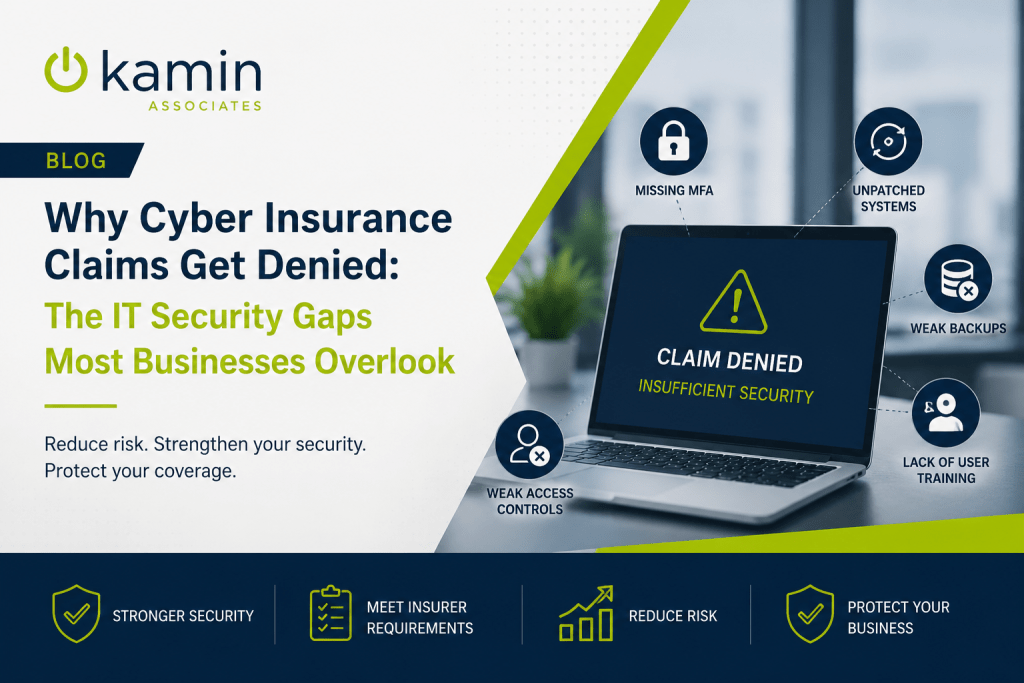
One of the most common reasons organizations face cyber insurance challenges is the absence of multi-factor authentication (MFA).
Today, MFA is considered a foundational security requirement. Many insurance applications specifically ask whether MFA is enforced for email accounts, remote access solutions, administrative accounts, and cloud platforms.
If a cyberattack occurs because an account was compromised and MFA was not properly implemented, insurers may argue that the organization failed to meet the conditions outlined in the policy.
Unfortunately, many businesses still deploy MFA inconsistently. They may protect some systems while leaving critical applications, remote access tools, or privileged accounts vulnerable.
A comprehensive MFA strategy should cover all business-critical systems, especially those that provide access to sensitive data or administrative controls.
Unpatched Systems and Unsupported Technology
Another issue that frequently appears during cyber insurance investigations is poor patch management.
Cybercriminals routinely exploit known software vulnerabilities that already have available security updates. When organizations fail to apply patches in a timely manner, they create opportunities for attackers to gain access to systems and networks.
Unsupported operating systems and aging hardware can create even greater risk because security updates may no longer be available from the manufacturer.
Following a cyber incident, insurance providers may examine whether vulnerabilities that contributed to the attack had available patches that were ignored or delayed.
Businesses should maintain a documented patch management process that includes regular updates, vulnerability monitoring, and lifecycle planning for aging technology.
Weak Backup and Disaster Recovery Practices
Many organizations assume that simply having backups is enough. Unfortunately, not all backup strategies provide adequate protection against modern cyber threats.
Ransomware attacks increasingly target backup systems in an effort to prevent recovery. If backups are not properly secured, isolated, tested, and monitored, they may fail when they are needed most.
Insurance providers often expect organizations to maintain reliable backup and disaster recovery procedures as part of their risk management strategy.
Businesses should regularly test backup restorations, verify backup integrity, and maintain recovery plans that clearly define how systems and data will be restored following an incident.
A backup that has never been tested may provide a false sense of security.
Lack of Employee Security Awareness Training
Technology alone cannot prevent every cyberattack.
Many successful breaches begin with phishing emails, social engineering tactics, or other forms of human error. Employees who are not trained to recognize suspicious activity can unintentionally provide attackers with access to sensitive systems and information.
Insurance providers increasingly view security awareness training as a critical component of cybersecurity readiness.
Organizations should provide ongoing training that helps employees identify phishing attempts, recognize fraudulent requests, understand password best practices, and follow established security policies.
Documenting training activities can also help demonstrate a commitment to cybersecurity during insurance reviews or audits.
Inadequate Access Controls
Access management plays a major role in reducing cybersecurity risk.
Employees should only have access to the systems and information necessary to perform their job responsibilities. Excessive permissions can increase the impact of compromised accounts and insider threats.
Cyber insurance providers may review access control practices when evaluating risk or investigating incidents. Weak password policies, shared accounts, dormant user accounts, and excessive administrative privileges can all raise concerns.
Implementing the principle of least privilege, regularly reviewing user permissions, and disabling unused accounts can help organizations strengthen security while reducing insurance-related risk.
The Importance of Vulnerability Assessments
Many businesses are unaware of the security weaknesses that exist within their environment until an incident occurs.
Regular vulnerability assessments help organizations identify weaknesses before attackers can exploit them. These assessments provide valuable insight into missing patches, misconfigured systems, exposed services, weak passwords, and other security concerns.
By proactively identifying and addressing vulnerabilities, businesses can significantly reduce their exposure to cyber threats.
Vulnerability assessments can also help organizations demonstrate due diligence when working with insurance providers, auditors, customers, and regulatory bodies.
Rather than waiting for a breach to reveal weaknesses, businesses can use assessments to continuously improve their security posture.
Cyber Insurance and Cybersecurity Must Work Together
Cyber insurance can provide valuable financial protection, but it should never be viewed as a substitute for cybersecurity.
Insurance providers increasingly expect organizations to maintain strong security controls, document their cybersecurity efforts, and actively manage risk. Businesses that fail to meet these expectations may discover coverage gaps at the worst possible time.
The good news is that many of the requirements insurers prioritize are also best practices that improve overall security. Multi-factor authentication, patch management, employee training, access controls, backups, and vulnerability assessments all play a critical role in protecting your business from modern cyber threats.
By taking a proactive approach to cybersecurity, organizations can reduce risk, improve operational resilience, and strengthen their position when applying for or renewing cyber insurance coverage.
How Kamin Associates Can Help
Understanding cyber insurance requirements and maintaining a strong security posture can be challenging for growing businesses. Kamin Associates helps organizations identify vulnerabilities, strengthen security controls, and reduce risk through comprehensive IT security services and network vulnerability assessments.
Whether you’re preparing for a cyber insurance renewal, addressing compliance requirements, or looking to improve your overall cybersecurity strategy, our team can help you build a stronger and more resilient IT environment. Contact Kamin Associates to learn how we can support your organization’s security goals.