Operational security is no longer just an IT concern; it’s a core business priority. Every connected device, application, and user introduces potential risk. For organizations trying to maintain stable, secure, and efficient operations, understanding what is happening across the network at all times is essential.
This is where network scanning becomes a critical tool. For firms like Kamin Associates, network scanning is a foundational part of evaluating and strengthening operations security. But many business leaders still ask the key question: how does network scanning help assess operations security?
To answer that, we need to break down what network scanning is, what it reveals, and how it directly impacts the stability and security of business operations.
What Is Network Scanning?
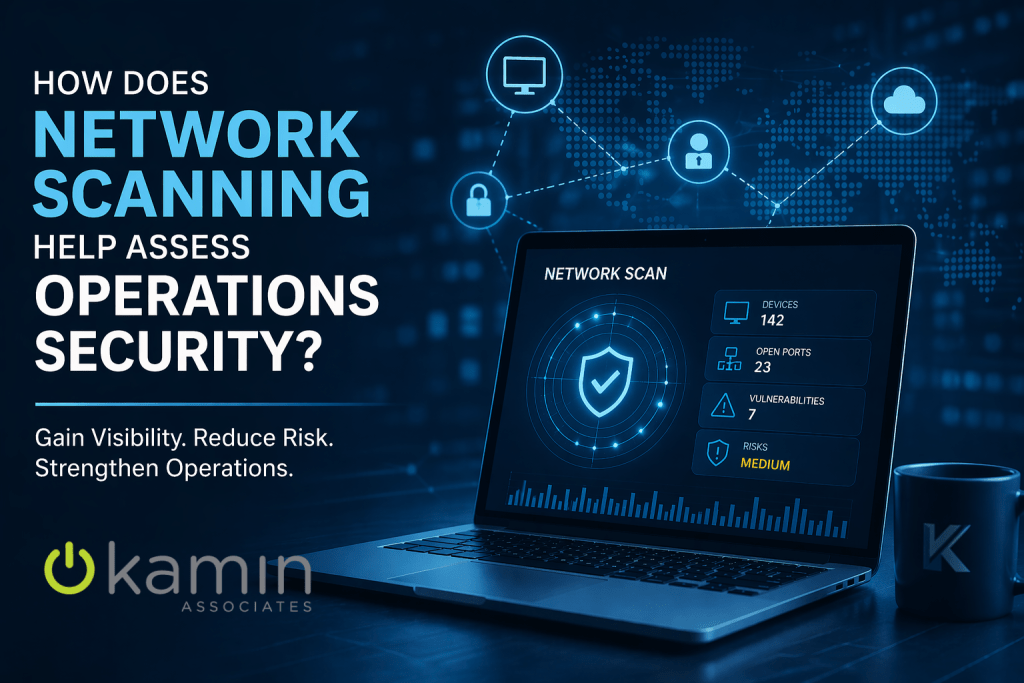
Network scanning is the process of systematically identifying devices, systems, and services connected to a network. It involves probing an environment to detect active hosts, open ports, operating systems, running applications, and potential vulnerabilities.
In simple terms, it provides a real-time map of everything operating within an organization’s digital infrastructure.
There are different types of network scanning, including:
- Port scanning: Identifies open communication ports that could be entry points for attackers
- Vulnerability scanning: Detects known security weaknesses in systems and applications
- Network mapping: Visualizes how devices and systems are connected
- Service detection: Identifies what services and software are running on devices
Each of these plays a role in helping organizations understand their operational security posture.
Why Operations Security Depends on Visibility
Operations security focuses on protecting the processes, systems, and data that keep a business running. It ensures that sensitive information is only accessible to authorized users and that critical systems remain stable and secure.
However, you cannot protect what you cannot see.
Many organizations operate with incomplete visibility into their own networks. Shadow IT, outdated systems, unmanaged devices, and misconfigured services often exist without IT teams fully realizing it. These blind spots create operational risk.
This is exactly where network scanning becomes essential.
So, how does network scanning help assess operations security? It provides complete visibility into the environment, exposing risks that could otherwise remain hidden until a breach or failure occurs.
1. Identifying All Connected Assets
One of the most important benefits of network scanning is asset discovery.
Organizations often underestimate the number of devices connected to their network. Laptops, servers, mobile devices, IoT hardware, and cloud services can all exist within the same environment.
Network scanning helps answer questions like:
- What devices are currently connected?
- Are there unauthorized or unknown systems on the network?
- Are all assets properly managed and updated?
Without this visibility, operational security is weakened because unknown devices can become entry points for cyberattacks.
Kamin Associates often emphasizes that maintaining an accurate asset inventory is the first step toward strong operational security.
2. Detecting Vulnerabilities Before They Are Exploited
Another major way network scanning supports operations security is through vulnerability detection.
Modern networks are complex, and software updates, configuration changes, and user activity can unintentionally introduce weaknesses. These vulnerabilities might include:
- Outdated operating systems
- Unpatched software
- Weak authentication configurations
- Open ports that should be closed
- Misconfigured firewalls or access controls
Network scanning tools continuously identify these issues so they can be addressed before attackers exploit them.
This proactive approach significantly reduces operational risk by preventing downtime, data breaches, and service disruptions.
3. Improving Configuration and Compliance
Operations security is closely tied to proper system configuration and regulatory compliance.
Network scanning helps ensure systems are configured according to security best practices and industry standards. It can detect:
- Default passwords still in use
- Incorrect user permissions
- Inconsistent security policies across devices
- Non-compliant software versions
For businesses in regulated industries, this is especially important. Compliance frameworks often require continuous monitoring and documentation of system security status.
By using network scanning, organizations can generate the evidence needed for audits and demonstrate ongoing compliance.
4. Strengthening Network Segmentation and Access Control
A strong operational security strategy depends on controlling how systems communicate with each other.
Network scanning helps map out these communication paths, revealing whether segmentation is working as intended. For example, it can identify:
- Systems that should be isolated but are not
- Unexpected traffic between sensitive and non-sensitive environments
- Devices communicating outside approved channels
This insight allows IT teams to refine access controls and reduce the potential impact of a breach. If one system is compromised, proper segmentation ensures the threat does not spread across the entire network.
5. Supporting Continuous Monitoring and Change Detection
One of the biggest operational risks businesses face is change that goes unnoticed.
A network that is secure today may not be secure tomorrow if new devices are added or configurations change without approval. Network scanning enables continuous monitoring, helping teams detect:
- New or unauthorized devices
- Sudden changes in network behavior
- New open ports or services
- Unexpected software installations
This ongoing visibility is essential for maintaining operations security over time, not just during periodic audits.
6. Prioritizing Security Risks Based on Business Impact
Not all vulnerabilities carry the same level of risk. Some may be low priority, while others could directly disrupt business operations.
Network scanning helps organizations prioritize threats based on:
- Severity of the vulnerability
- Exposure to external networks
- Criticality of the affected system
- Potential business impact
This allows IT teams to focus resources where they matter most, ensuring that operational stability is protected first.
For example, a vulnerability on a public-facing server will typically require immediate attention compared to a low-risk internal system.
7. Enhancing Incident Response and Recovery
When a security incident occurs, speed matters. The faster an organization can identify the source of a problem, the faster it can recover.
Network scanning supports incident response by quickly revealing:
- Affected systems
- Unusual network activity
- Lateral movement of threats
- Compromised devices or services
This helps IT teams contain issues before they escalate into full-scale operational disruptions.
It also supports disaster recovery planning by ensuring that critical systems are clearly identified and properly secured.
8. Reducing Operational Downtime
Ultimately, operations security is about maintaining business continuity.
Network scanning reduces downtime by proactively identifying issues that could cause system failures or security incidents. Instead of reacting to outages, organizations can fix problems early—often before users are even affected.
This proactive approach leads to:
- More stable systems
- Fewer emergency outages
- Lower recovery costs
- Improved productivity across the organization
Why Network Scanning Is Essential for Modern Businesses
As networks become more complex and distributed—with cloud services, remote work, and third-party integrations—visibility becomes harder to maintain.
This complexity makes network scanning not just helpful, but essential.
It provides organizations with the intelligence needed to understand their environment, reduce risk, and maintain strong operations security.
Final Thoughts
So, how does network scanning help assess operations security? It provides the visibility, intelligence, and continuous monitoring needed to protect business systems from disruption and attack. From identifying assets and vulnerabilities to improving compliance and reducing downtime, network scanning plays a central role in operational resilience.
For organizations looking to strengthen their security posture, Kamin Associates emphasizes that network scanning is not a one-time activity—it’s an ongoing practice. When integrated into a broader security strategy, it becomes one of the most effective ways to ensure operations remain secure, stable, and efficient.
In a digital landscape where threats are constantly evolving, the ability to see, understand, and respond to your network in real time is no longer optional, it’s fundamental to operational success.
Take the Next Step Toward Stronger Operations Security
Network scanning is one of the most effective ways to gain visibility into your IT environment and strengthen operations security—but it’s most powerful when it’s part of a broader, proactive security strategy.
At Kamin Associates, we help organizations move beyond reactive IT practices by implementing continuous monitoring, vulnerability detection, and network assessment strategies tailored to their operational needs. Our goal is to help you reduce risk, improve system reliability, and maintain confidence in your day-to-day operations.
If you’re ready to better understand your network and strengthen your operations security posture, our team is here to help.
Contact Kamin Associates today to schedule a consultation and take the first step toward a more secure, resilient IT environment.