
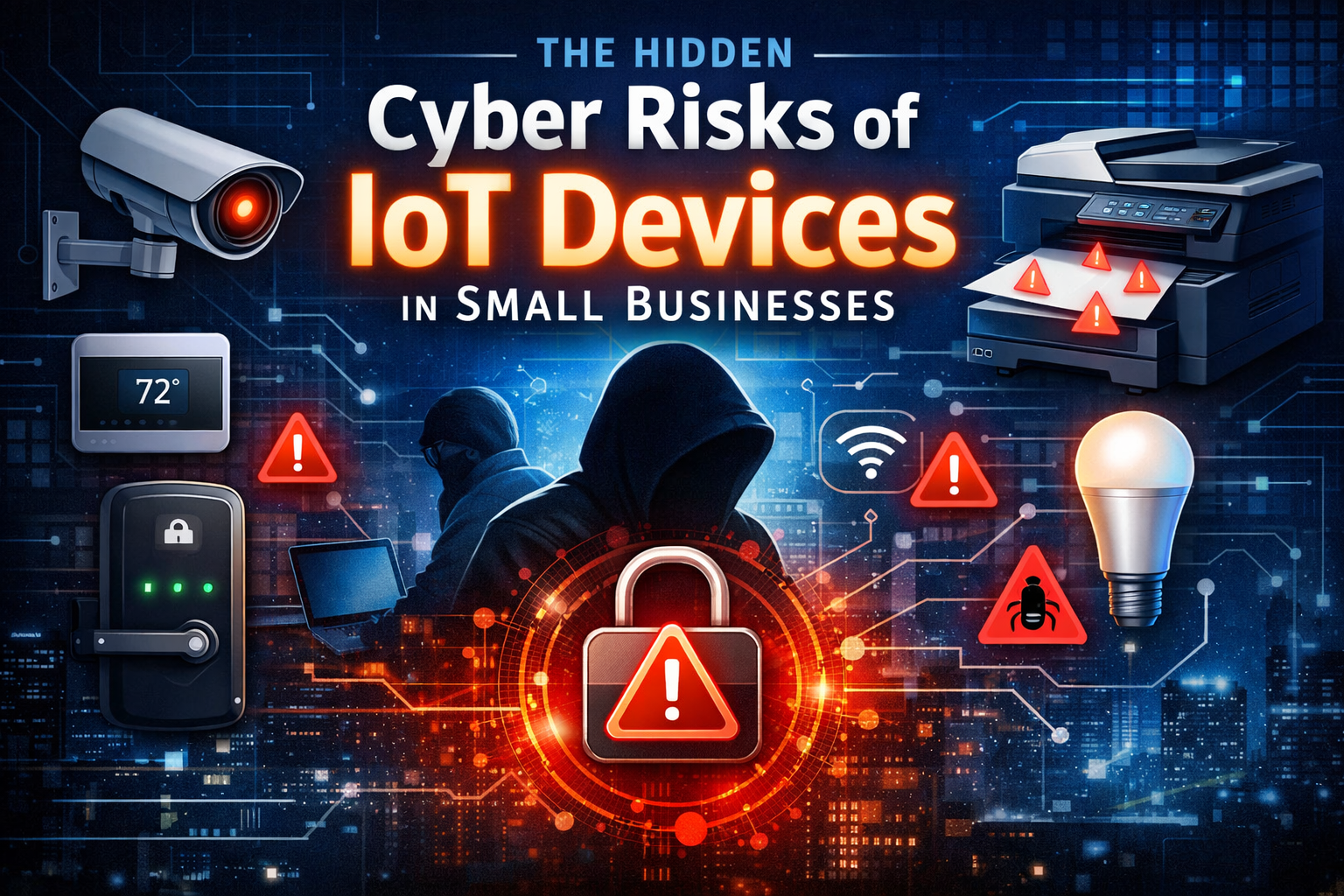
Small businesses are increasingly using Internet of Things (IoT) devices to streamline operations, improve security, and enhance customer experiences. From smart cameras and connected thermostats to networked printers and smart locks, these devices offer convenience and efficiency. But they also introduce cybersecurity risks that are often overlooked. Without dedicated IT teams, many small businesses assume these devices are safe “out of the box,” leaving them vulnerable to attacks that can compromise sensitive data, disrupt operations, and damage customer trust.
What Are IoT Devices?
IoT devices are any physical devices connected to a network that can collect or transmit data. Examples in small businesses include:
- Surveillance cameras
- Smart lighting and climate control systems
- Point-of-sale (POS) terminals
- Wi-Fi-enabled printers
- Connected appliances, like coffee machines or smart locks
Each device may seem low-risk on its own, but together they create multiple potential entry points for attackers. Cybercriminals often target IoT devices because they are less monitored and frequently overlooked, making them easy paths into the network.
Common IoT Vulnerabilities
Default Credentials
- Many devices ship with preset usernames and passwords like “admin/admin.”
- If left unchanged, attackers can easily gain access and move laterally across the network.
Outdated Firmware and Software
- IoT devices often require updates to fix security flaws.
- SMBs often overlook these updates, leaving devices vulnerable to attacks.
Unencrypted Communications
- Many devices transmit data without proper encryption.
- This can expose sensitive information, such as live video feeds or customer payment data.
Network Segmentation Issues
- Placing IoT devices on the same network as core business systems can amplify damage if a device is compromised.
- Segmentation (separate VLAN or Wi-Fi network) can contain breaches and reduce risk.
Real-World Examples
- A small retail business was hacked via an unsecured smart thermostat, leading to customer payment theft and ransomware downtime.
- A law office’s connected printer was exploited to intercept confidential client documents.
These incidents highlight that even seemingly “low-risk” devices can have serious consequences if left unsecured.
Steps SMBs Can Take to Secure IoT Devices
1. Inventory All Devices
- Track every connected device, including employee-owned gadgets like smart assistants.
2. Update Default Passwords
- Use strong, unique passwords for each device.
- Enable multi-factor authentication (MFA) where available.
3. Keep Firmware and Software Current
- Enable automatic updates if possible.
- Monitor vendor websites for security patches.
4. Segment IoT Devices on a Separate Network
- Reduce the impact of a compromised device.
- Prevent attackers from easily accessing critical systems.
5. Encrypt Communications
- Ensure devices transmitting sensitive data use strong encryption (like TLS).
- Avoid connecting insecure devices to networks with critical information.
6. Evaluate Vendors
- Ask about security features, patching policies, and remote management options.
- Look for centralized security dashboards or automated updates.
7. Train Employees
- Educate staff on proper device usage and potential risks.
- Many breaches occur due to human error, like connecting unsecured devices.
Looking Ahead
As IoT adoption grows, SMBs will face more targets and sophisticated attacks. Cybercriminals are increasingly aware that smaller organizations may lack robust security measures. Proactive steps—tracking devices, securing credentials, updating firmware, segmenting networks, encrypting communications, evaluating vendors, and training employees—can help SMBs enjoy IoT benefits safely.
IoT security isn’t just about technology. It’s about protecting your reputation, safeguarding customer data, and ensuring smooth business operations. SMBs that prioritize IoT security today will be better equipped to leverage connected devices safely, remain resilient against attacks, and maintain the trust of customers and partners.