
Cybersecurity and compliance are no longer separate conversations. As regulations become stricter and cyber threats grow more sophisticated, businesses must build security strategies that not only protect data but also meet industry-specific compliance requirements.
Whether you operate in healthcare, finance, or legal services, a strong cybersecurity strategy helps reduce risk, avoid costly penalties, and build trust with clients. The key is aligning security controls with regulatory expectations from the start.
Start With a Risk Assessment
Every effective cybersecurity strategy begins with understanding risk. A comprehensive risk assessment identifies where sensitive data lives, how it flows through your systems, and where vulnerabilities exist.
This step is critical for compliance because most frameworks require organizations to demonstrate that risks are identified, documented, and actively managed. Risk assessments should be reviewed regularly and updated as your technology environment changes.
Understand the Compliance Standards That Apply to You
Different industries face different regulatory requirements, and a one-size-fits-all approach does not work.
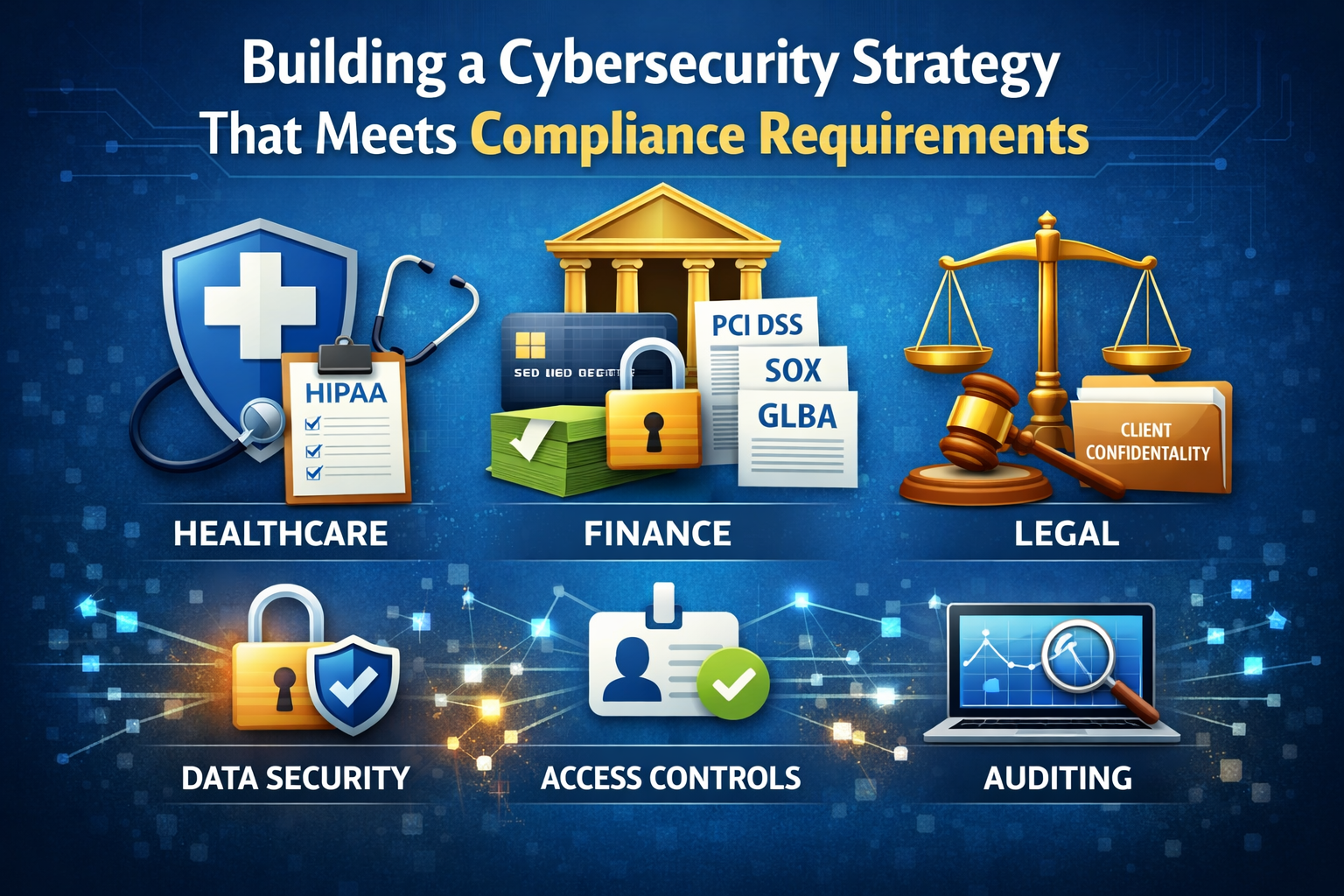
Healthcare organizations must comply with HIPAA, which focuses heavily on protecting patient data and ensuring confidentiality, integrity, and availability. Financial institutions are often subject to regulations like PCI DSS, SOX, and GLBA, which emphasize data protection, access controls, and auditing. Legal firms must protect client confidentiality and may be bound by state privacy laws and ethical obligations, even when formal frameworks are not mandated.
Understanding which regulations apply to your business is essential before implementing controls.
Build Security Around Identity and Access
Identity is one of the most common attack vectors and a major focus of compliance frameworks. Strong identity and access management ensures that only authorized users can access sensitive systems and data.
Multi-factor authentication, role-based access controls, and regular access reviews are foundational components of a compliant cybersecurity strategy. These controls help limit insider threats and reduce the impact of compromised credentials.
Protect Data Wherever It Lives
Compliance requirements consistently emphasize data protection. This includes data at rest, data in transit, and data stored in cloud environments.
Encryption, secure backups, and data loss prevention tools help ensure sensitive information remains protected even if systems are compromised. For regulated industries, maintaining clear data retention and disposal policies is just as important as securing the data itself.
Implement Continuous Monitoring and Logging
Compliance is not a one-time event. Organizations must be able to demonstrate ongoing oversight of their systems.
Security monitoring, centralized logging, and alerting help detect suspicious activity early and provide the documentation auditors expect. Logs should be retained according to regulatory requirements and reviewed regularly to identify anomalies.
Develop and Test an Incident Response Plan
Most compliance frameworks require documented incident response procedures. When a security incident occurs, businesses must respond quickly, contain the threat, and document what happened.
An effective incident response plan outlines roles, communication steps, escalation paths, and recovery procedures. Regular testing through tabletop exercises ensures your team is prepared and helps identify gaps before a real incident occurs.
Train Employees on Security and Compliance
Employees play a critical role in both cybersecurity and compliance. Phishing attacks, weak passwords, and accidental data exposure remain common causes of breaches.
Regular security awareness training helps employees understand their responsibilities, recognize threats, and follow proper procedures. Training also demonstrates due diligence during compliance audits.
Industry Use Cases
In healthcare, a compliant cybersecurity strategy ensures patient data is protected while enabling clinicians to access information quickly and securely. Encryption, access controls, and audit logs help organizations meet HIPAA requirements while maintaining operational efficiency.
In finance, cybersecurity strategies focus on protecting payment data, preventing fraud, and maintaining system integrity. Continuous monitoring and strict access controls help financial institutions meet regulatory expectations and reduce financial risk.
In legal services, protecting client confidentiality is paramount. Secure document management, encrypted communications, and controlled access help law firms safeguard sensitive case information and maintain client trust.
Align Security With Business Goals
A strong cybersecurity strategy should support business operations, not slow them down. When security controls are designed with compliance in mind, they reduce friction, improve resilience, and enable growth.
By taking a proactive approach and aligning technology, policies, and people, businesses can meet compliance requirements while strengthening their overall security posture.
Building a Compliant and Resilient Security Strategy
Cybersecurity and compliance go hand in hand. Organizations that build security strategies around regulatory requirements are better prepared to defend against threats, pass audits, and maintain customer confidence.
With the right planning, tools, and expertise, compliance becomes less of a burden and more of a competitive advantage.