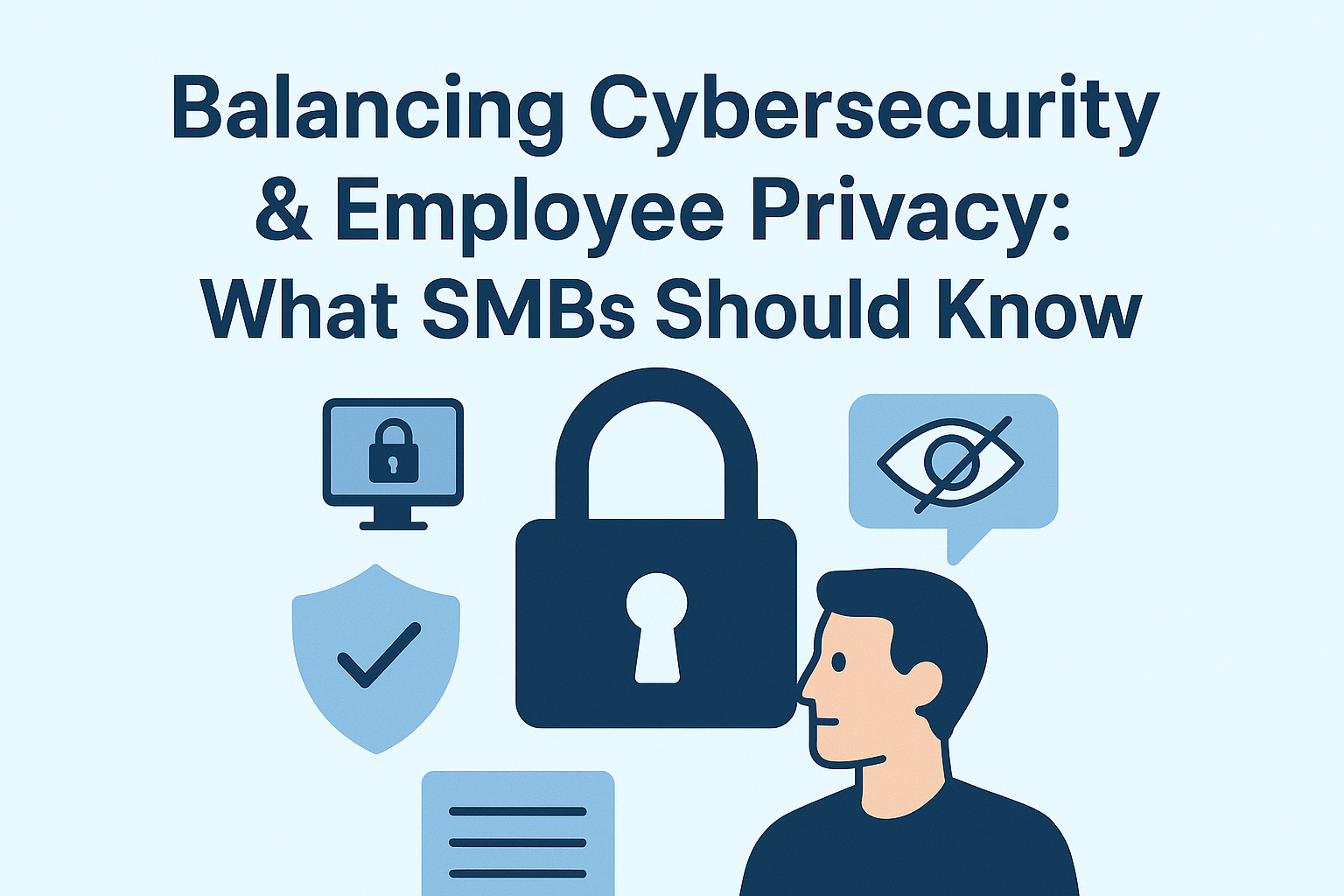
As cyber threats grow more sophisticated and businesses rely more heavily on cloud-based systems, protecting company data has become non-negotiable. But there’s a tricky tension that many small and medium-sized businesses (SMBs) face when strengthening cybersecurity: how do you implement monitoring, access controls, and logging without crossing a line into violating employee privacy or creating a culture of distrust?
This concern isn’t theoretical. Employees today are increasingly aware of digital privacy. Organizations deploy threat detection tools, endpoint monitoring, and logging solutions that gather activity data — but if workers feel spied on or unclear about why monitoring exists, trust and morale take a hit. At the same time, lack of transparency can open the door to legal and compliance risks.
Striking the right balance is not only possible — it can strengthen both cybersecurity and organizational culture when done thoughtfully. Here’s what SMBs need to keep in mind.
Why SMBs Can’t Ignore Monitoring — and Why They Must Handle It Carefully
Small and midsize companies often lack the layered defenses of large enterprises, making them attractive targets for threat actors. Monitoring activities, logging behavior, tracking anomalies, and controlling access are essential. These protections can help uncover:
- Compromised credentials
- Insider threats
- Malware activity
- Unauthorized data movement
- Access from suspicious geolocations
- Attempts by attackers to escalate privileges
But the same visibility that protects corporate data can drift into privacy territory, especially when monitoring includes keystrokes, screen recordings, device tracking, or browsing behaviors.
The goal for SMBs should be this:
Use monitoring to protect systems and data, not to surveil employees.
And most importantly — explain the difference.

When Monitoring Crosses the Privacy Line (And When It Doesn’t)
Not all monitoring is created equal.
Acceptable and expected:
- Logging unusual login attempts
- Alerting when large amounts of data leave the network
- Monitoring endpoints for malware
- Tracking access to sensitive documents
- Enforcing multi-factor authentication
Grey areas:
- Screen recording software
- Behavioral analytics tools that map user patterns
- Email scanning beyond antiphishing filters
Clearly invasive (and risky):
- Keylogging or reading personal messages
- Monitoring personal devices not enrolled in a corporate management system
- GPS tracking employees after hours
You don’t need invasive tools to maintain strong cyber hygiene. In fact, the most secure solutions rely more on architecture and access control than employee surveillance.
The Legal Landscape: What SMBs Should Know
Many business owners worry that if they “don’t monitor everything,” they’ll be held liable. But the opposite is often true — the legal risk grows when monitoring is overly broad or done without informed consent.
For U.S.-based SMBs, major considerations include:
- Transparency: Disclosing the nature of monitoring to employees
- Purpose: Monitoring must support legitimate business functions
- Scope: It must be proportional — monitor activity related to business systems, not personal data
- Retention: Only store logs as long as truly needed
- Confidentiality: Avoid exposing personal employee data to unauthorized staff
While laws vary by state, the safest rule of thumb is:
If you collect data, explain it. If you monitor, document it. If you access logs, do so responsibly.
A written technology-use policy shared with employees — signed at onboarding — drastically reduces risk.
The Bigger Organizational Benefit: Transparency Builds Trust
Cybersecurity doesn’t have to feel authoritarian. In fact, when handled with transparency, it can create:
- Higher awareness of best practices
- Better compliance with security policies
- Improved reporting of suspicious activity
- Stronger shared responsibility culture
When employees understand why certain protections exist, they become part of the defense strategy rather than resisting it.
Here’s the mindset shift:
- Bad approach: “We monitor everything you do just in case.”
- Better approach: “Cyber threats are real. We use system monitoring tools to protect company and customer data, and here’s exactly how it works.”
Best Practices for Transparent, Respectful Cybersecurity
Here are actionable steps SMBs can take to balance security and privacy:
1. Define Your Purpose Clearly
Don’t add monitoring because a tool offers it. Define the specific security goals behind each capability.
2. Communicate Policies Openly
Technology-use policies should be:
- Written in plain language
- Presented during onboarding
- Revisited annually
Communication isn’t “nice-to-have” — it’s risk-reduction.
3. Separate Business and Personal Data
Wherever possible:
- Provide company-managed devices
- Restrict monitoring to corporate accounts
- Avoid collecting personal device or personal browsing data
4. Use Tools That Are Built for Security — Not Surveillance
Endpoint protection and SIEM tools should focus on detecting threats, not mapping employee behavior.
5. Adopt Least-Privilege Access
Employees should have the minimum level of access required to do their job. This reduces the need for intrusive monitoring.
6. Establish a Data Retention Framework
Logs are valuable. They’re also sensitive.
Have a policy for:
- Who can access them
- Why
- How long they are kept
7. Review Tools Periodically
Monitoring should evolve with business needs — not sit untouched for years collecting unnecessary data.
Balancing Privacy and Security Isn’t Optional — It’s Strategic
SMBs don’t have to choose between protecting sensitive systems and maintaining employee trust. In reality, the strongest cybersecurity posture comes from combining:
- Purposeful monitoring
- Clear communication
- Defined access controls
- Respect for employee privacy
When employees understand the threat landscape and feel confident that monitoring is handled responsibly, they become allies in cybersecurity rather than liabilities.
A business that gets this balance right strengthens both its defense posture and its organizational culture.